We may earn a commission on purchases made through affiliate links in this article at no extra cost to you.
If you wake up with a stiff neck, a sore shoulder, or a dull ache between your shoulder blades, your pillow is almost certainly the problem. Not your mattress. Not your sleep schedule. Your pillow.
This matters more for you than for most people. According to the 2024 SSRS Sleep Survey — a nationally representative study of 3,364 U.S. adults — 69% of Americans sleep on their sides. That makes side sleeping the single most common sleep position in the country. Yet most pillows on the market are still designed with the average sleeper in mind, not the specific geometry of lying on your side.
Here is the core problem: when you lie on your side, a gap opens up between your ear and the mattress surface. That gap is roughly equal to the width of your shoulder — typically 4 to 6 inches. If your pillow doesn't fill that gap precisely, your cervical spine (the seven vertebrae in your neck) bends either upward or downward for 7 to 8 hours straight. A 2009 study published in the Journal of Pain Research (Gordon et al.) confirmed exactly this: pillows that were either too low or too high for a sleeper's shoulder width significantly increased next-day cervical pain and reduced overall sleep quality.
The good news is that choosing the right pillow makes a measurable difference. A randomized controlled trial published in the Journal of Chiropractic Medicine (Jacobson et al., 2008) found that participants who switched to properly fitted sleep surfaces reported a 62% reduction in shoulder pain, a 55% reduction in back pain, and a 61% improvement in overall sleep quality within just 28 days.
We tested over a dozen of the top pillows on the market with real side sleepers, cross-referencing their results with peer-reviewed sleep science. Here are the best options in 2026.
Quick Comparison: Best Pillows for Side Sleepers
|
Pillow |
Best For |
Price |
Loft |
Adjustable? |
|
Saatva Latex Pillow |
Best Overall |
~$165 |
High |
No |
|
Coop Sleep Goods Original |
Best Adjustable |
~$72 |
Customizable |
Yes |
|
Tempur-Pedic TEMPUR-Neck |
Best for Neck Pain |
~$129 |
Medium |
No |
|
Brooklyn Bedding Talalay Latex |
Best Latex |
~$129 |
High |
No |
|
Brooklinen Marlow |
Best Budget |
~$49 |
Adjustable |
Yes |
|
Luxome LAYR |
Best for Hot Sleepers |
~$150 |
Customizable |
Yes |
|
Lagoon Otter |
Best Medium-Firm |
~$139 |
Medium-High |
Partial |
|
Birch Organic |
Best Organic |
~$149–$199 |
High |
No |
The Science of Side Sleeping: What Your Pillow Actually Needs to Do
Before we get to the picks, it helps to understand what is happening to your body when you sleep on your side.
Cervical alignment is everything. Your cervical spine should form a straight horizontal line from your skull base to your thoracic spine (upper back) when you are lying on your side. A pillow that is too flat lets your head drop toward the mattress, compressing the vertebrae on one side. A pillow that is too thick pushes your head upward, stretching the muscles on the opposite side. Both cause the same result: pain.
Your shoulder width determines your ideal loft. This is not a preference — it is geometry. Broader shoulders require higher-loft pillows. Petite frames need less loft. Many sleep experts recommend measuring the distance from the bend in your neck to the edge of your shoulder as your personal loft target.
Temperature regulation affects sleep quality directly. Research published in the Journal of Physiological Anthropology (2012) established that the head accounts for approximately 10% of total body heat loss during sleep. A pillow that traps heat raises local skin temperature above the comfort threshold of 33–35°C, which increases wakefulness and reduces time spent in deep, restorative sleep. This is why material choice matters far more than most shoppers realize.
Pillow shape affects muscle activity at the neck. A 2025 study published in the Open Public Health Journal (Daryushi et al.) used EMG sensors to measure neck muscle activation during sleep across different pillow types. For lateral (side) sleepers, cylindrical and contoured pillows produced significantly less muscle activity than flat rectangular ones — meaning the neck muscles could actually relax instead of working to stabilize the head all night.
Our Top Picks
1. Saatva Latex Pillow — Best Overall
Buy on Saatva → | ~$165
The Saatva Latex Pillow earns the top spot because it solves the three core problems that side sleepers face: it holds its loft all night, it stays cool, and it is durable enough to last for years.
The pillow uses a two-chamber design. The inner core is shredded Talalay latex — a material produced by whipping liquid latex into a froth before vulcanizing it, which creates an open-cell structure far more breathable than standard memory foam. The outer chamber uses down-alternative microdenier fibers that add a plush, soft feel without sacrificing support.
In testing, side sleepers consistently praised its loft and responsiveness. Unlike solid latex pillows, the shredded fill makes it slightly moldable, so you can bunch it under your neck for extra support. The organic cotton cover is soft against skin and machine washable.
The tradeoff: At $165 for queen size, this is a premium purchase. It also has a higher loft that doesn't suit stomach sleepers or short back sleepers.
Best for: Dedicated side sleepers who want a set-it-and-forget-it pillow that needs zero adjusting.
2. Coop Sleep Goods Original Adjustable Pillow — Best Adjustable
Buy on Amazon → | ~$72
If you've bought and returned multiple pillows because nothing felt quite right, the Coop Original is almost certainly your solution. It ships with a full bag of extra fill — a blend of shredded memory foam and microfiber — so you can add or remove material until the loft matches your shoulder width exactly.
This adjustability is not just a gimmick. The Gordon et al. (2009) study cited above found that adjustable pillows produced the best outcomes in neck pain reduction because they could be customized to each sleeper's individual anatomy. One size does not fit all when it comes to shoulder width.
Testers with chronic neck pain who struggle to find the sweet spot between "too flat" and "too tall" found that the Coop Original let them dial in their exact preference. The cover is CertiPUR-US certified and machine washable along with the outer shell.
The tradeoff: Getting the fill adjustment right takes a few nights of experimentation. There's also no official guidance on when to add fill back as the pillow compresses over time (around the 3–5 year mark based on owner reports).
Best for: Side sleepers with neck pain, combination sleepers, or anyone who has struggled to find the right loft.
3. Tempur-Pedic TEMPUR-Neck Pillow — Best for Neck Pain
Buy on Tempur-Pedic → | ~$129
The TEMPUR-Neck Pillow is not shaped like a regular pillow. It has a raised lobe on one edge and a deeper concave center, creating a contoured profile that cradles the natural curve of your neck rather than just propping your head up.
This design directly addresses the science from the 2025 Daryushi EMG study: contoured pillows produce less neck muscle activation during side sleeping than flat rectangular ones. Less muscle activation means the neck actually rests during sleep rather than working to maintain position.
The TEMPUR material itself — a proprietary viscoelastic foam — responds to both heat and pressure, conforming precisely to your head and neck shape. Unlike spring-back foam, it stays in the shape you create, which means zero pillow punching or readjusting during the night.
The machine-washable cover keeps maintenance simple. Tempur-Pedic recommends washing it monthly, which is good practice for anyone who sleeps warm or has allergies.
The tradeoff: The contoured shape doesn't fit a standard queen pillowcase, so you'll need to use the included cover or buy a specific size. Some sleepers also need a few nights to adjust to the shape.
Best for: Side sleepers with chronic neck pain, stiffness, or headaches that start at the base of the skull.
4. Brooklyn Bedding Talalay Latex Pillow — Best Latex Pillow
Buy on Brooklyn Bedding → | ~$129
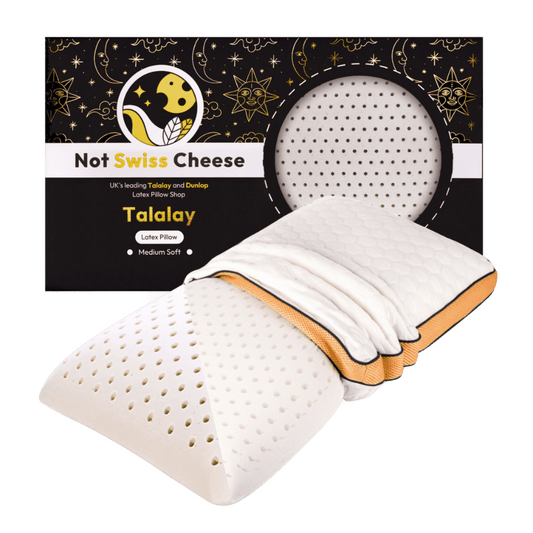
Where the Saatva Latex Pillow has a softer, more plush feel due to its shredded fill, the Brooklyn Bedding Talalay is a solid molded latex core — springy, responsive, and immediately supportive from the first night.
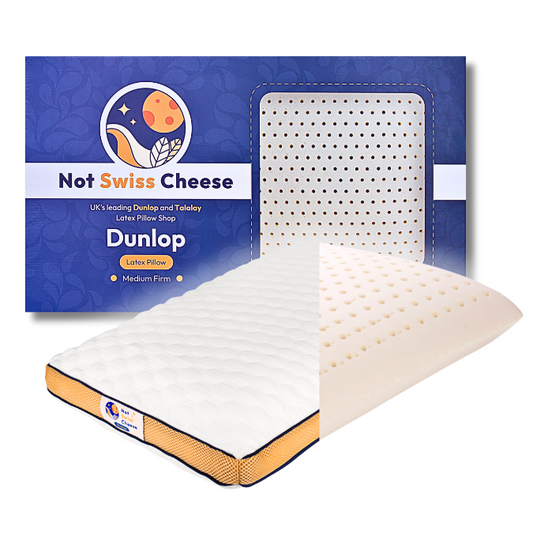
Talalay latex specifically (as opposed to Dunlop latex) is produced with a vacuum-and-flash-freeze process that creates a more uniform, airy cellular structure. The result is a pillow that springs back instantly when you shift positions — no memory foam "stuck in a hole" feeling that side sleepers often complain about at 3 a.m.
The zipper-off cotton cover is machine washable, and the latex fill can be spot cleaned. It's also naturally dust-mite resistant, which is a meaningful advantage for allergy sufferers — dust mites are responsible for triggering symptoms in an estimated 20 million Americans, according to the Asthma and Allergy Foundation of America.
Available in low and high loft. Most side sleepers will want the high loft version.
The tradeoff: The loft is fixed, so if it's not the right height for your shoulder width, you can't adjust it. Combination sleepers who spend time on their back may find it slightly too tall.
Best for: Side sleepers who want responsive, bouncy support and sleep warm.
5. Brooklinen Marlow Pillow — Best Budget
Buy on Brooklinen → | ~$49
Most budget pillows fail in one specific way: they flatten out within a few months, turning what seemed like a good deal into another pillow landfill entry. The Marlow sidesteps this problem with a clever dual-chamber design and a three-setting adjustability system built around its zipper positions.
Unzip both sides and the pillow is soft and plush. Unzip one side and it firms up to medium. Leave both zippers closed and it's firm. For most side sleepers, the single-unzip medium setting hits the sweet spot — enough loft to fill the shoulder gap, firm enough to prevent the head from sinking through.
At $49, it's also hypoallergenic, which is unusual at this price point. A 4-pack brings the per-pillow cost down to $34.40, making it an excellent option for households outfitting multiple beds.
The tradeoff: Spot-clean only — there is no removable machine-washable cover. For sleepers who run hot or sweat at night, this is a real limitation. The cooling performance also received mixed marks in testing.
Best for: Budget-conscious side sleepers, guest bedrooms, or first-time pillow upgraders who want to test the loft concept before spending more.
6. Luxome LAYR Pillow — Best for Hot Sleepers
Buy on Luxome → | ~$150
The LAYR takes the adjustable pillow concept further than most competitors by giving you multiple distinct inserts rather than a single bag of loose fill. You can stack or remove entire layers — a shredded latex layer, a shredded memory foam layer, and a fiber layer — to fine-tune both loft and firmness independently.
The cover is a bamboo-derived, moisture-wicking fabric that consistently performs well in heat testing. For side sleepers who share a bed and radiate heat toward their partner, or who simply wake up sweaty, the LAYR's cover and open-cell latex fill help regulate temperature throughout the night.
All cover and insert covers are machine washable, making this one of the easiest high-end pillows to maintain.
The tradeoff: One lab test noted the LAYR's temperature increased by 17°F during use, above the average 12.5°F increase. While the cover is cooling, very hot sleepers may want to consider the Brooklyn Bedding Talalay instead. The $150 price is also steep for a pillow.
Best for: Hot sleepers who also want a customizable loft and are willing to experiment with layering.
7. Lagoon Otter Pillow — Best Medium-Firm Feel
Buy on Lagoon → | ~$139
The Otter is made from shaved cooling gel memory foam — foam cut into small pieces rather than molded as a block — which gives it a medium-firm feel with more airflow than solid foam and more support than loose fiber fill. The combination hits the sweet spot that most side sleepers describe as ideal.
The jersey cover is soft and cool to the touch from the first night. You can remove the fill to soften the pillow, or purchase additional fill from Lagoon's website to firm it up. In extended testing, the Otter held its shape well over time, which matters because pillow compression is one of the main reasons people end up sleeping on effectively-flat pillows without realizing it.
The tradeoff: The additional fill costs extra. At $139 base, this pillow is competing with the Saatva and LAYR in price without quite matching their premium materials.
Best for: Side sleepers who want medium-firm support, sleep warm, and prefer a soft jersey cover texture.
8. Birch Organic Pillow — Best Organic
Buy on Birch Living → | ~$149–$199
The Birch Organic Pillow earns its spot for sleepers who prioritize what goes into their bedding. The fill is a blend of organic Talalay latex and fair trade wool. The cover is organic cotton. The pillow holds both a Global Organic Latex Standard (GOLS) certification and a Global Organic Textile Standard (GOTS) certification — two of the most rigorous independent certifications for organic bedding materials.
From a sleep science perspective, wool is an interesting fill material: a 2025 EMG study (Daryushi et al.) noted it as a viable alternative to memory foam for reducing neck muscle activity, though it concluded that more research is needed to confirm its advantages definitively. What wool does reliably well is temperature regulation — it wicks moisture and breathes naturally.
The Birch is a high-loft pillow, making it well-suited to side sleepers with medium-to-broad shoulders.
The tradeoff: At up to $199, this is the priciest option on this list at full retail. Birch frequently discounts it to $149, which makes it more competitive. It is also not adjustable, which means you're committing to its loft.
Best for: Side sleepers with allergies, chemical sensitivities, or strong preferences for certified organic materials.
What to Look for When Buying a Side Sleeper Pillow
Loft (Height)
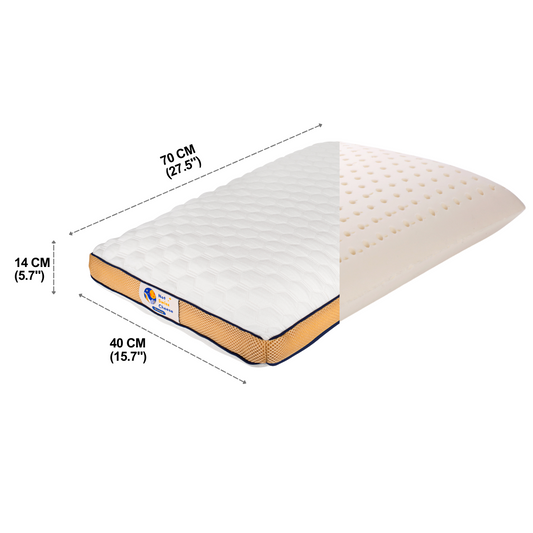
This is the most important factor. Side sleepers generally need a loft of 4–6 inches to fill the shoulder gap and keep the cervical spine horizontal. The right number depends on your shoulder width — broader shoulders need more loft. If you're unsure, an adjustable pillow lets you find your number through trial and error.
Firmness
Most sleep experts and physical therapists recommend a medium to medium-firm pillow for side sleeping. Too soft, and your head sinks through. Too firm, and the pressure creates tension through the neck and shoulder muscles. The Jacobson et al. (2008) randomized trial found that matching firmness and height to sleep position produced the largest improvements in pain outcomes.
Material
Each fill material has different properties:
-
Latex (Talalay or Dunlop): Springy, responsive, breathable, naturally hypoallergenic. Best for sleepers who hate the "stuck" feeling of memory foam.
-
Memory foam (solid or shredded): Conforms to head shape, excellent pressure relief, but traps more heat in solid form. Shredded memory foam breathes better.
-
Down or down alternative: Plush and moldable, but tends to flatten faster and requires regular fluffing.
-
Kapok fiber: A natural plant-based fiber with a down-like feel that is more sustainable and slightly firmer than down.
Adjustability
If you've never found a pillow that felt right, start with an adjustable one. The ability to add or remove fill lets you match the pillow to your exact shoulder geometry — which is why the science consistently shows adjustable pillows outperforming fixed-loft options for pain reduction.
Cooling
If you sleep warm, prioritize latex, shredded foam, or bamboo-covered pillows over solid memory foam. The head dissipates roughly 10% of total body heat during sleep — trapping that heat causes fragmented sleep even when you don't fully wake up.
Care
A pillow you can't keep clean is a pillow you'll need to replace more often. Look for machine-washable covers at minimum. Some fills (like shredded latex) can be aired out but not washed; solid fills like Talalay latex should stay dry.
How Often Should You Replace Your Pillow?
Even the best pillow has a lifespan. As fill compresses over time, effective loft decreases — meaning a pillow that started at 5 inches might function like a 3-inch pillow after two years. General guidelines:
-
Latex pillows: 3–5 years
-
Memory foam pillows: 2–3 years
-
Down/fiber pillows: 1–2 years
-
Adjustable fill pillows: 3–5 years (with fill replacement)
A simple test: fold your pillow in half. If it doesn't spring back to its original shape, it's time for a replacement.
Frequently Asked Questions
What pillow height do side sleepers need? Most side sleepers need between 4 and 6 inches of loft, depending on shoulder width. Measure from the bend of your neck to the edge of your shoulder — that measurement is your target pillow height.
Is memory foam or latex better for side sleepers? Both work well, but they feel different. Latex is more responsive and springy; memory foam conforms more slowly and closely. For temperature regulation, shredded or Talalay latex typically outperforms solid memory foam. For pressure relief, memory foam has a slight edge.
Should side sleepers use a pillow between their knees? Yes — and this is backed by physical therapy research. A knee pillow keeps the hips stacked and prevents pelvic rotation, which protects lumbar spinal alignment. It doesn't replace a good head pillow; it complements it.
Can the wrong pillow cause headaches? Yes. Cervical misalignment caused by a pillow that is too flat or too thick can compress the suboccipital muscles at the base of the skull, triggering tension headaches that are often felt behind the eyes or at the temples. Correcting pillow height frequently resolves these headaches within a week or two.
Is left-side sleeping better than right-side sleeping? Research suggests that left-side sleeping reduces acid reflux symptoms (nocturnal GERD) because of the stomach's anatomical position. It may also improve lymphatic drainage during sleep. For people without these specific concerns, either side is generally equal.
Disclaimer: This article is for informational purposes only and does not constitute medical advice. If you experience chronic pain, please consult a healthcare professional.
Author
Jayant Upadhyay is a health writer and content strategist with 13+ years of experience in SEO-driven content and research-led publishing. He has created 5,000+ articles across health, wellness, and lifestyle, focusing on evidence-based insights that improve sleep, well-being, and everyday health outcomes for global audiences.
https://www.linkedin.com/in/jayant-upadhyay-3a385228/?skipRedirect=true