Health
Dunlop vs Talalay Latex Pillows: A Complete Comparison

The short version
- Dunlop and Talalay start as the same natural rubber; the factory process decides how the pillow feels.
- Dunlop is denser and firmer and holds its height under load. Talalay is softer, springier and more open, so it sleeps cooler.
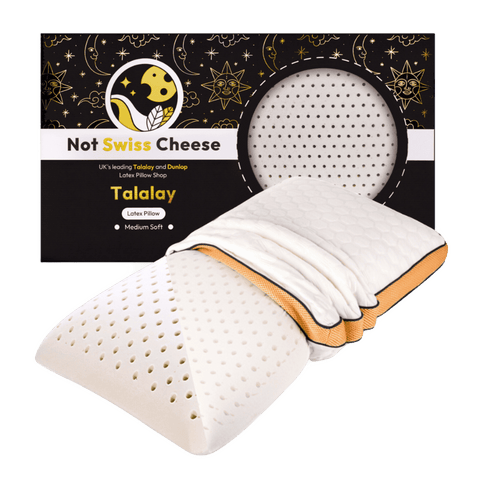
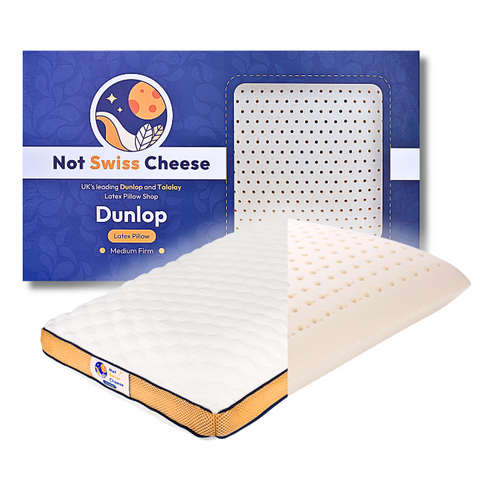
- Our Talalay latex pillow is medium soft and 99% natural rubber; our Dunlop pillow is medium firm and dense.
- Choosing for side sleeping? Our side sleeper pillow guide compares both by shoulder width and mattress.
On this page
Latex pillows come in two forms: Dunlop and Talalay. Same raw material, two different manufacturing processes, and the process is what decides how the pillow feels, how cool it sleeps, and how long it lasts.
The short version:
- Dunlop — denser and firmer. Better for back and stomach sleepers who need steady, unchanging support. Higher natural latex content and a simpler production process.
- Talalay — lighter and softer, with more airflow. Better for side sleepers and anyone who sleeps hot. More complex to make, so it costs more.
Neither is "better". They are built for different necks.
Quick comparison
| Feature | Dunlop latex | Talalay latex |
|---|---|---|
| Density | 5–6 lb/ft³ | 3–4 lb/ft³ |
| Feel | Firm, stable, slow contour | Soft, springy, fast rebound |
| Airflow | Moderate | Higher — more open cell structure |
| Natural latex content | 90–100% | 60–70% |
| Best for | Back and stomach sleepers | Side sleepers, hot sleepers |
| Certifications | GOLS, OEKO-TEX | OEKO-TEX |
How Dunlop and Talalay latex are made
Everything that follows in this guide traces back to two different factory processes, so it's worth understanding them first.
The Dunlop process
Liquid latex is whipped into a foam, poured into a mould in a single pour, and baked at around 220°F (104°C). During the bake, the latex particles settle under their own weight. That settling is the whole story of Dunlop: the finished core is slightly denser at the bottom than the top, which is what gives it its firm, planted feel.
The moulds carry thermal pins that leave vertical channels through the core — the visible holes in a latex pillow — which is where its ventilation comes from. The core is then washed under high pressure to remove residual proteins and processing agents, and baked a second time to drive out moisture.
It's a short process: roughly four to six hours, one wash cycle, one bake-settle-rebake sequence.
The Talalay process
Talalay adds two steps that change the material completely.
The mould is filled only about a third of the way, then sealed and put under vacuum. The latex expands to fill the space, which is what makes it lighter — less material, more air. The expanded foam is then flash-frozen at around −20°F (−29°C) before vulcanisation, which locks the cell structure in place before gravity can pull the particles downward.
That freeze is why Talalay has an even density top to bottom, and why it feels uniform wherever you press it. It's also why Talalay is expensive: the vacuum and freezing equipment is specialised, the cycle runs eight to ten hours, and the wash is a multi-stage system rather than a single pass.
| Production feature | Dunlop | Talalay |
|---|---|---|
| Mould fill | Full pour, single step | Partial fill, vacuum expansion |
| Setting method | Bake and settle | Flash-freeze, then vulcanise |
| Cycle time | 4–6 hours | 8–10 hours |
| Washing | Single high-pressure | Multi-stage |
| Energy use | Lower | Substantially higher |
What the difference actually feels like
Density and support. Dunlop sits at 5–6 lb/ft³ against Talalay's 3–4. In practice that means Dunlop holds its shape under load and pushes back consistently through the night. Talalay compresses more readily and redistributes pressure across a wider area rather than resisting it at one point.
Rebound. Talalay springs back faster. If you change position several times a night, a Talalay pillow has already recovered its shape by the time your head settles again. Dunlop contours more slowly and holds the contour longer — which is support if you stay still, and drag if you don't.
Consistency. Because of the freeze step, Talalay's density barely varies across the core. Dunlop's varies more by design, being firmer toward the base. Neither is a defect; they're two different answers to the same problem.
Temperature. Talalay's more open structure moves air more freely and sheds heat faster, which is the main reason hot sleepers tend to prefer it. Dunlop is denser and holds a little more warmth, though it handles moisture well — worth knowing if night sweats are the issue rather than heat itself.
Which one suits your sleeping position
Sleeping position is the single most useful thing to decide on, because it sets how much height and how much give you need between your ear and your mattress.
| Sleep position | Better fit | Why |
|---|---|---|
| Side | Talalay | Fills the wider gap between shoulder and ear while relieving pressure on the shoulder itself |
| Back | Dunlop | Steady, unchanging support keeps the neck in line with the spine |
| Stomach | Dunlop (low loft) | Firmness stops the head tipping back; height matters more than material here |
| Combination | Talalay | Faster rebound means fewer disruptions when you move |
If you're primarily solving for neck pain rather than position, our pillows for neck pain collection narrows it down further.
Natural content and certification
This is where the two genuinely diverge, and where a lot of marketing gets slippery.
Dunlop cores are typically 90–100% natural latex. Talalay cores are typically 60–70% natural, with the balance made up of synthetic polymers — the synthetic content is part of what makes the vacuum-and-freeze process work consistently.
If maximum natural content is your priority, Dunlop is the straightforward answer. If you want the Talalay feel, you are accepting some synthetic content as part of the deal. Anyone telling you otherwise is selling you something.
| Latex type | Natural content | Synthetic content | Certifications |
|---|---|---|---|
| Dunlop | 90–100% | 0–10% | GOLS, OEKO-TEX |
| Talalay | 60–70% | 30–40% | OEKO-TEX |
GOLS (Global Organic Latex Standard) certifies organic latex content and supply chain. OEKO-TEX certifies that the finished product is free of a defined list of harmful substances. Both are worth checking for by name — the certificate number should be available on request.
Both types are naturally resistant to dust mites, mould and mildew, which is why latex tends to suit allergy sufferers better than down or feather. Both release very low levels of VOCs; any faint rubber smell on unpacking fades within a day or two with ventilation, and is a sign of genuine latex rather than a problem.
So which should you buy?
We make both, in the same factory, to the same certifications.
The Dunlop Medium Firm is the one to pick if you sleep on your back or front, if you want the highest natural latex content, or if you've historically found soft pillows leave your neck aching by morning.
The Talalay Medium Soft is the one if you sleep on your side, if you run hot, or if you're carrying shoulder tension that a firm pillow makes worse.
Still not sure? Both come with a 100-night trial, which is the only genuinely reliable way to answer this question — a pillow that feels right in the first five minutes and a pillow that feels right on night thirty are not always the same pillow.
Care and how long they last
A quality latex core will hold its support for around eight to ten years. That's the number that matters when you compare a latex pillow against a £20 polyester one that flattens inside eighteen months — over a decade, latex is usually the cheaper option per year, not the dearer one.
To get there:
- Never machine wash the core. Use a protector and spot-clean the cover.
- Keep it out of direct sunlight — UV degrades latex.
- Rotate and flip it occasionally so it wears evenly.
- Air it out every few months.
Our full guide to cleaning and maintaining a latex pillow goes into more detail, and five signs your pillow needs replacing covers how to tell when it's finally done.
FAQs
Is Dunlop firmer than Talalay?
Yes. Dunlop is denser (5–6 lb/ft³ against 3–4) and feels noticeably firmer and more planted. Talalay is softer and springier with a more even feel throughout the core.
Which is better for neck pain?
It depends on the cause. Neck pain from poor alignment — common in back sleepers — usually responds better to Dunlop's steadier support. Neck and shoulder pain from pressure, common in side sleepers, usually responds better to Talalay. Height matters as much as material either way.
Which sleeps cooler?
Talalay. Its more open cell structure moves air more freely and sheds heat faster. Both are considerably cooler than memory foam, which traps heat by design.
How long do latex pillows last?
Around eight to ten years with reasonable care — several times the life of a synthetic pillow.
Can I wash a latex pillow?
Not the core. Machine washing breaks latex down. Use a removable cover and a pillow protector, and spot-clean or gently hand-wash the cover only.
Are latex pillows suitable for allergy sufferers?
Generally yes — latex is naturally resistant to dust mites, mould and mildew. The exception is a genuine latex allergy, which is rare but real; if you have one, natural latex is not for you regardless of type.
Dunlop or Talalay for side sleepers?
Talalay, in most cases. Side sleeping creates the widest gap between ear and mattress and puts the most pressure through the shoulder, and Talalay handles both better.
Keep reading
What we make
We manufacture the pillows this guide describes. Same certifications, sold direct.