Dunlop vs Talalay Latex Toppers for Back Pain
If back pain is making mornings harder, the right topper can change how your mattress supports you. Dunlop and Talalay are two ways of making latex, but neit...
On this page
If back pain is making mornings harder, the right topper can change how your mattress supports you. Dunlop and Talalay are two ways of making latex, but neither is automatically better for your back: firmness, thickness and the condition of the mattress underneath matter just as much.
What your back needs from a topper
Back pain does not automatically mean you need the firmest surface available. A surface that is too hard can leave pressure at the hips and shoulders, while one that is too soft can let the pelvis sink excessively. The useful choice is the one that keeps your body supported in your usual sleep position.
- If you sleep on your side: your shoulder and hip need room to settle, while your waist still needs support. A topper that is too firm can create pressure; one that is too soft can let your middle sink.
- If you sleep on your back: look for a surface that supports the pelvis without forcing it to sink deeply. The aim is a comfortable, level position through the lumbar area.
- If you sleep on your front: a very soft topper can let your hips drop and increase the arch in your lower back. A more supportive surface may feel better, though changing sleep position can also help some people.
These are practical checks, not diagnoses. Back pain has more than one cause, and a topper cannot treat an injury or replace clinical advice.
When Dunlop may suit you better
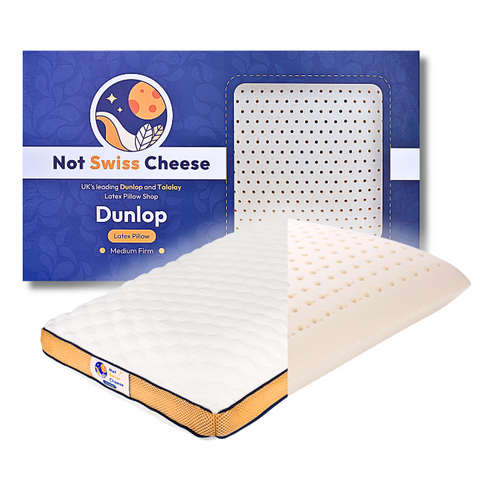
Consider Dunlop if you prefer a more substantial, planted feel or want to change a mattress surface that feels too soft but still has a level, supportive base. Do not rely on the word “Dunlop” alone. Check the stated firmness and thickness, then consider whether they match the change you want.
Our Organic Topper is a solid GOLS-certified organic Dunlop latex layer with a GOTS-certified organic cotton zip cover. It is one example of a Dunlop construction; its certifications describe the materials and textile standards, not a guarantee that its feel will suit every back.

A topper can make a sound mattress feel more supportive or more comfortable at the surface. It cannot rebuild a collapsed edge or level a deep dip. If the mattress has lost its basic shape, replacing the mattress is the more direct fix.
When Talalay may suit you better
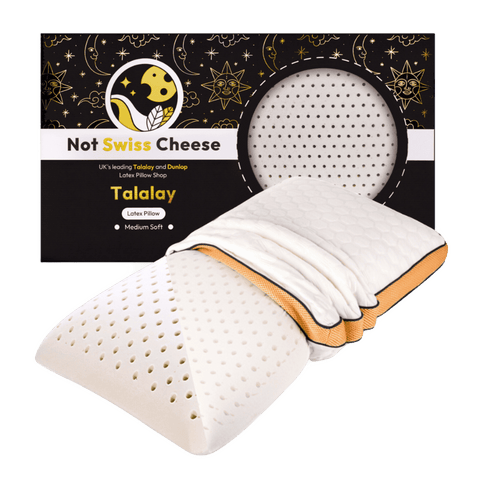
Consider Talalay if you prefer a lighter, more buoyant response and want a topper that feels less dense under you. That preference may matter if you move often during the night or dislike the more grounded feel commonly associated with Dunlop.
Talalay is not inherently softer, more supportive or better for pain. A firmer Talalay topper can feel more supportive than a softer Dunlop topper. Compare the actual firmness specification and thickness instead of treating the production method as a shortcut to the right choice.
How to keep a topper in place
- Check the mattress first. Lie in your usual position and notice whether you sink unevenly, feel pressure at the hips or shoulders, or roll towards a dip. A topper will not fix structural sagging.
- Decide what needs to change. Are you trying to soften a firm surface, or add a more supportive feel to a mattress that is still level? Those are different jobs.
- Compare the specifications. Look at firmness, thickness, latex type and cover. If a seller provides density or an indentation firmness measure, compare like with like rather than comparing labels alone.
- Read certification details accurately. GOLS and GOTS refer to standards for materials and textiles. They do not measure spinal support or tell you whether a topper is the right firmness.
- Ignore unsupported “orthopaedic” claims. The word is not a firmness specification. Look for clear construction details and choose based on how the surface supports your body.
Be honest about the mattress you already have. If it is broadly level but feels too firm or too soft, a topper may be a sensible adjustment. If it has a deep, permanent hollow, spending more on a topper will not restore the support beneath it.
Frequently asked questions
Is Dunlop latex firmer than Talalay?
Dunlop often feels denser, while Talalay often feels lighter and more buoyant. But the firmness of a specific topper depends on its formulation and specification, so compare the product details rather than assuming the method determines the feel.
Does organic certification tell me which latex topper is best for my back?
No. Organic certification concerns the named materials and how they meet the relevant standard. It does not measure firmness, spinal alignment or suitability for a particular person.
How to keep a mattress topper from shifting?
Place a nonslip mattress pad between the topper and mattress, and make sure both are the same size. A fitted sheet that securely covers both layers can help hold them together; straps can provide extra stability if needed.
How to secure a mattress topper to a mattress?
Use a nonslip pad between the topper and mattress, then cover both with a snug fitted sheet. If the topper still moves, secure it with elastic straps designed to hold the layers together.
How to keep a topper in place?
A nonslip pad beneath the topper can reduce movement, while a snug fitted sheet over the topper and mattress helps keep the layers together. Check that the topper is aligned with the mattress before making the bed.
Conclusion
Dunlop and Talalay describe different latex-making methods, not a clinical answer to back pain. Dunlop often feels denser; Talalay often feels more buoyant. The better topper is the one whose actual firmness and thickness help you maintain comfortable, neutral alignment on a mattress that still provides a sound base.
What we make
We manufacture the pillows this guide describes. Same certifications, sold direct.