Non Toxic Cooling Pillows: What Actually Cools, What to Avoid, and How to Choose in 2026
If you want non toxic cooling pillows , here is the annoying truth in 2026: most “cooling” claims are just different ways of using synthetic materials that t...
On this page
If you want non toxic cooling pillows, here is the annoying truth in 2026: most “cooling” claims are just different ways of using synthetic materials that trap heat or dump chemical-sounding marketing on top. And yes, the numbers behind the cooling pillow market are big, so the gimmicks are getting louder, not quieter, with the global market sitting at $4.8 billion.
Key Takeaways
|
1) Cooling starts with structure Latex’s open cell structure tends to breathe better than memory foam, which is why it is often a better non toxic cooling pillows starting point. |
2) “Gel” is not a temperature plan Gel-infused toppers and pillows can cool on contact, then settle, and they are not automatically “non toxic”. |
|
3) Look for actual certifications In 2026, we still prioritise third-party checks for natural rubber and fabrics, not brand vibes. |
4) Pick the right loft for your sleep position Side sleepers usually need different height than back sleepers to avoid neck strain. |
|
5) If you suffer from neck pain, start with alignment A “cool” pillow that is the wrong height can still make you wake sore. |
6) Memory foam alternative options exist If you want less heat retention, start with latex or consider shredded options that breathe more. See our memory foam alternatives. |
Quick Q&A (people actually ask)
|
|
Non-toxic options are carving into a global cooling pillow market worth $4.8 billion.
What “non toxic cooling pillows” should mean in 2026
When people say non toxic cooling pillows, they are usually asking two different questions. One is about temperature control. The other is about chemical exposure and indoor air quality.
In 2026, we see a lot of brands focusing on one while distracting you with the other. For example, some products “cool” using synthetic add-ons but do not give you useful info about materials, off-gassing, or cover standards. Others market “clean” while using the same heat-trapping foams you already tried.
So here is our blunt checklist for non toxic cooling pillows that actually holds up:
- Materials: natural rubber latex and certified natural covers beat vague blends.
- Structure: open-cell designs tend to vent heat better than memory foam.
- Certifications: third-party textile and natural latex standards, not just “eco” labels.
- Comfort mechanics: the pillow must support your neck curve and stay stable.
Trade-off: the most aggressively “cool” products you see online often cool on contact and then lose the plot. If your pillow also collapses over time, it can keep your neck in a bad position all night, which wrecks your sleep quality anyway.
Why memory foam and gel cooling often fail hot sleepers
Memory foam has a well-known problem, it tends to soften and hold onto heat. That is why many “cooling” memory foam alternatives are really just memory foam with extra marketing.
In 2026, the gel story is still similar. Gel-infused designs can make the surface feel cooler for a short window, but they do not change the foam’s heat-retention behaviour. If your bedroom is warm, you still end up with a hot head and a pillow that feels less breathable after the initial cool-down.
If you want the “math” behind it, here is another number from the market data. Gel-infused cooling pillows held 38.4% market share in 2025, even though they are not automatically the healthiest route to non toxic cooling pillows.
Latex cooling basics: Talalay vs Dunlop for hot sleepers
If you are hunting for non toxic cooling pillows and want a material that behaves differently from memory foam, latex is the obvious place to look. It has an open, airy structure that is designed for airflow, and it is known for bouncing back instead of collapsing.
We will keep this simple, because the internet loves overcomplication.
Dunlop latex, in plain terms
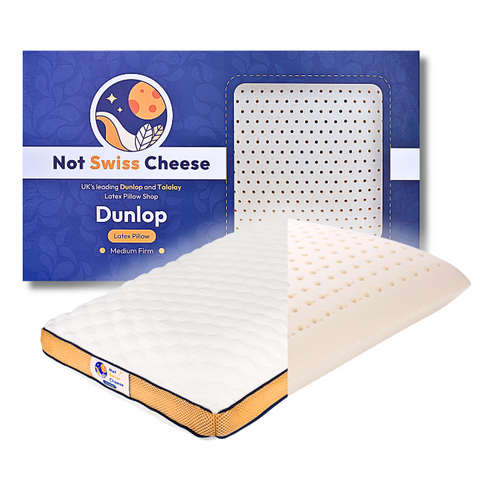
Dunlop is typically firmer and denser. That matters because support affects how much your head sinks and how much surface area stays in contact. If you over-sink, you reduce airflow around your face, and you can feel warmer.
Our Dunlop range is built for neck alignment and longevity. For example, the Dunlop Medium Support Queen Size Latex Foam Pillow is £58.99, and the product highlights call out 70%+ natural rubber content and an open structure.

Talalay latex, in plain terms
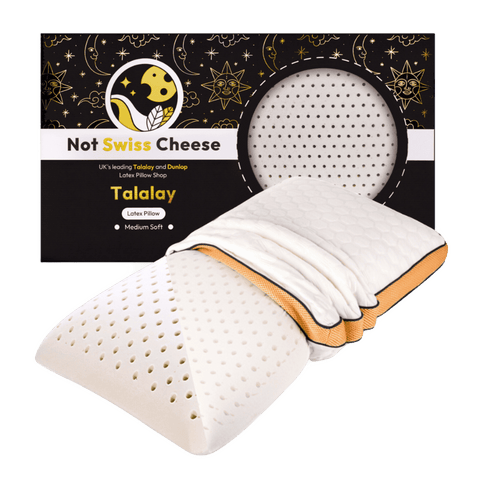
Talalay is usually described as softer or more plush. The important bit for hot sleepers is that the structure is often marketed and built around enhanced airflow, which is a sensible cooling route, not a gimmick.
Our Talalay Medium Soft Neck Pain Relief Latex Pillow is £74.99, and the product highlights explicitly mention an open-cell structure for airflow and cooling for hot sleepers.
Which one should you pick?
- Side sleepers who like stable support: start with Dunlop-style firmness.
- Hot sleepers who want softer surface feel: start with Talalay-style plushness.
- Neck pain and overheating together: treat both as the design brief, and do not accept a pillow that only “cools” but does not align your neck.
If you want to compare the two without drowning in marketing, take a look at our latex pillow guide (Dunlop vs Talalay).
Cooling is only half the job, alignment is the other half
Plenty of people buy non toxic cooling pillows because they wake sweaty. Then they wake with a stiff neck anyway, because the pillow loft and firmness are wrong for how they sleep.
That is why we talk about neck and posture in the same breath as temperature. A breathable pillow that forces your cervical spine into a bad angle will still leave you waking up wired, even if it is cool.
Here is a useful reminder. Trial-based testing across body shapes and sleeping positions has been running for years, and the core conclusion still holds. Testers have trialled 100 pillows since 2016 to conclude that your body shape and sleep position dictate the “perfect” pillow.
How to choose your non toxic cooling pillow (step-by-step)
Here is the process we recommend, and it is designed to stop you wasting money on the wrong foam, at the wrong height, with the wrong cover.
- Start with your sleep position. Side sleepers usually need enough height to keep your neck aligned, not just something soft.
- Match firmness to sink depth. If you sink too far, you lose airflow and alignment.
- Decide what “cool” means for you. Do you sweat at the surface, or do you wake hot because the pillow holds heat?
- Check material transparency. Natural rubber latex core, open structure, and properly described covers are a better sign than vague “cooling fabric”.
- Be realistic about trade-offs. Very soft pillows can feel cool at first, but if they let your head sink, you can still overheat.
If you want a shortcut for choosing a direction, browse the collections by need. For example, neck pillows for posture and pain focuses your search on the cervical curve problem, not just temperature.
Real examples from our range (prices included)
Because you asked for non toxic cooling pillows, we will show you the kinds of options you can buy, not just principles.
Side sleepers who want breathable latex
If you sleep on your side and you run hot, your goal is usually to keep airflow around your face while keeping the neck supported.
Start with our side sleeper pillow collection. It includes Talalay and Dunlop options that are designed around side-sleep alignment and cooling structure.
Neck pain plus overheating
If your problem is both heat and neck stiffness, look for ergonomic contouring plus breathable materials.
Two examples we sell are:
- Talalay Medium Soft Neck Pain Relief Latex Pillow at £74.99, built around open-cell airflow and neck support for hot sleepers.
- Dunlop Medium Support Queen Size Latex Foam Pillow at £58.99, built for firmer support and longevity.
If you are deciding between the two based on your neck comfort, you might also like our comparison approach in pillows for neck pain and soreness.
Orthopaedic support that stays ventilated
“Orthopaedic” claims get thrown around a lot. The only time we take it seriously is when the pillow is built around actual support and stays stable over time. Latex can do that better than many collapsing fills.
For a starting point, check our orthopaedic pillows collection, which is focused on supporting the natural curve of your neck and spine.
Common gimmicks to ignore when buying non toxic cooling pillows
This is the part where we call out the marketing you should be sceptical about. If a claim does not come with material details and a real mechanism, treat it as a guess, not a fact.
- “Orthopaedic” with no support description. Ask what it supports, and how it keeps that support after repeated nights.
- “Cooling” fabric with no heat-management path. Cooling should be about airflow and thermal behaviour, not just a surface feel.
- Buzzword foams. If it is just memory foam wearing a new name, you are not getting a true memory foam alternative.
- Fake urgency. “Limited stock” is not evidence of safety or performance.
Also, watch out for vague “non toxic” language. If a brand does not tell you what the pillow is made from, or it hides behind generic claims, that is not how you build trust in non toxic cooling pillows.
Care, durability, and how to keep your pillow truly breathable
Even the best materials will underperform if you treat them like disposable bedding. Latex pillows can last, but only if you maintain them and use a breathable cover.
Here is what you should do in real life:
- Use a breathable pillowcase and avoid trapping layers.
- Air it out regularly. Latex breathes better when it is not sealed in moisture.
- Follow cover care instructions to avoid damaging the breathable structure.
- Replace when support drops. If your neck alignment starts failing, cooling will feel worse too.
Our broader collections are built around the idea that a pillow should stay supportive, not collapse into a hot, uneven lump. If you want a place to start, use our pillows collection for side-by-side options.
Conclusion
Non toxic cooling pillows are not a single ingredient. They are a combination of safe-enough materials, third-party standards where possible, and real heat management through structure and airflow. In 2026, the brands that win are the ones that give you specifics, like natural rubber latex cores and open-cell designs, not just “cooling” buzzwords.
If you want a practical path, start with latex. Compare Talalay for plush airflow comfort and Dunlop for firmer, stable support, then choose height based on your sleep position and neck needs. That is how you get a cooler night and a less grumpy morning, without relying on gimmicks.
Frequently Asked Questions
Are non toxic cooling pillows actually non toxic, or is that just marketing?
“Non toxic” only means something if the pillow is built from transparent materials and sensible cover choices, not vague claims. For non toxic cooling pillows, natural latex and well-described textile standards are the cleaner route compared with generic synthetic foam blends.
What’s the best material for non toxic cooling pillows if I sleep hot?
Latex is usually the best starting point because open-cell structure supports airflow. If you are shopping for non toxic cooling pillows, prioritize latex designs over memory-foam-style heat retention and surface-only “gel cooling” claims.
Is Talalay latex or Dunlop latex better for hot sleepers in 2026?
Both can work, but Talalay is often chosen when you want a softer feel and airflow-led cooling. If you are searching for non toxic cooling pillows and you run hot on your side, compare Talalay comfort against Dunlop’s firmer support.
Do non toxic cooling pillows help with neck pain, or do I just need the right height?
You need both. Non toxic cooling pillows can stay cooler, but if the loft and firmness push your neck out of alignment, you still wake up sore.
Are gel-infused cooling pillows safer than other synthetic options?
Gel-infused pillows can feel cooler at first, but they do not automatically make the product “non toxic.” If you want non toxic cooling pillows, focus on what the core and cover are made from, not just the cooling add-on.
What should I look for on the label when buying non toxic cooling pillows?
Look for clear material descriptions, natural latex content where relevant, and covers that are properly specified. If the brand only says “cooling” without telling you what is inside, treat it as a weak answer for non toxic cooling pillows.
How do I choose between a latex pillow and a memory foam alternative for overheating?
If your overheating is about heat retention, latex typically outperforms memory-foam-style fills because it does not trap heat in the same way. For non toxic cooling pillows, we would rather you choose a ventilating structure and correct support than rely on “cooling” coatings.
What we make
We manufacture the pillows this guide describes. Same certifications, sold direct.