Pillow Material Breathability Comparison Chart (Natural Cooling Pillows for Hot Sleepers)
Pillow Material Breathability Comparison Chart is what you actually need if you wake up feeling damp, clammy, or overheated. In 2026, the “cooling” claims ar...
On this page
Pillow Material Breathability Comparison Chart is what you actually need if you wake up feeling damp, clammy, or overheated. In 2026, the “cooling” claims are everywhere, but the boring part that matters is how each material lets air move and moisture escape.
Key Takeaways
| Material type | Breathability behaviour (practical) | Best for | Watch-outs |
|---|---|---|---|
| Natural latex (Dunlop, Talalay) | High airflow through the material, less heat trapping | Side sleepers, hot sleepers, people who dislike “stuck” foam | Needs the right loft for your neck (support beats “cool”) |
| Organic cotton (covers) | Moderate moisture wicking, helps the cover feel less damp | Anyone using latex who wants better fabric feel | Cotton alone cannot fix a non-breathable core |
| Memory foam (standard behaviour) | Usually traps heat against your skin, tends to feel warmer at night | People who specifically want slow, moulding support | Not the best memory foam alternative if you sweat |
| “Buzzword foams” (gimmicky cooling foams) | Often only thin “cooling” layers, heat trapping remains in the core | None, unless proven airflow is real | Marketing wording beats measurable breathability |
| Open-cell airflow designs (where used) | Better air exchange than closed-cell foams | Hot sleepers, people who flip because it feels hotter | Still depends on loft and cover fabric |
- Latex wins for breathability because the structure allows air movement, not because of marketing.
- If you sweat at night, your “cooling” problem is usually moisture buildup + limited airflow, not your duvet.
- Cover materials matter, but they are not a substitute for a breathable pillow core.
- For neck comfort, breathability is secondary to support and neutral alignment.
- We talk about materials over hype on our pages, including the latex vs memory foam pillow comparison.
- If you are dealing with overheating, see our cooling-focused guide for night sweats and cooling latex pillows.
Why “Breathability” matters more than most cooling pillow claims
Most people use the word “cooling” when they really mean: “I do not want to wake up damp, sweaty, and uncomfortable.” You get that outcome when heat and moisture can move away from your skin while you sleep.
To be honest, a lot of brands in 2026 still lean on gimmicky wording. “Cooling gel”, “temperature balancing”, or “phase-change” usually means one thin layer on top of the same heat-trapping base foam.
Latex is different. The natural properties of latex allow it to absorb and evaporate moisture efficiently. The result is less clammy build-up, and a calmer sleeping surface even when the room is warm.
This is not about being “premium”. It is about how the material behaves, especially around moisture buildup and air movement.
Pillow Material Breathability Comparison Chart: what compares best (and why)
Here is the practical version of a Pillow Material Breathability Comparison Chart. We are not pretending every manufacturer’s “foam” is identical, but the core behaviours are consistent enough to guide a sensible purchase.
| Material | What you feel at night | Moisture behaviour | Breathable pillow materials score (relative) | Typical role in natural cooling pillows |
|---|---|---|---|---|
| Natural latex (Dunlop, Talalay) | More neutral temperature, less “held heat” | Absorbs and evaporates moisture efficiently | High | Core material for hot sleepers, neck support and durability |
| Organic cotton cover (as a topper layer) | Softer hand-feel, less damp sensation | Wicks moisture away from skin to the surface | Medium to High | Works with latex, not instead of it |
| Memory foam | Warm, can feel “sticky” as you move | Slower heat release, more trapped warmth | Low to Medium | Not ideal if you sweat, especially on warmer nights |
| “Cooling” hybrid foams | Sometimes cooler briefly, then it warms again | Often still traps heat in the main foam layer | Low to Medium | A sales pitch more than a solution without real airflow |
| Down and similar natural fills | Variable. Can be breathable but shifts with use | Can manage moisture if loft stays right | Medium | Works for some sleepers, but support can drift |
If you want the plainest summary, natural latex mattress topper cores and latex pillow cores tend to perform better than memory foam alternatives when breathability is your main problem.
Natural latex circulates air far better than memory foam, which traps heat against your skin.
Natural latex pillows: Dunlop vs Talalay for breathability and comfort
People ask for a Pillow Material Breathability Comparison Chart because they are also trying to solve a different problem at the same time, neck pain or night sweats. Latex can help with both, but you still need the right feel for your sleeping position.
On our side, we split the discussion into two common latex types, Talalay latex and Dunlop latex. Both are natural and both aim for responsive support, but they feel different.
- Dunlop latex pillows often feel a bit more supportive and “set” to your head, helpful if you like firmer support.
- Talalay latex pillows often feel a bit softer on first contact while still giving latex-style support and airflow.
Either way, latex breathability is the real cooling advantage. It is not an “add-on”, it is the material behaviour itself.

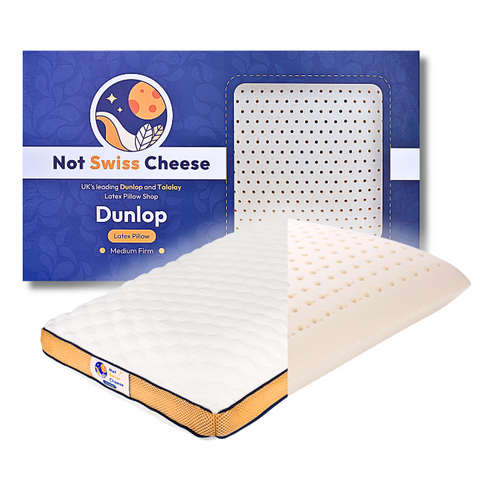
Example from our range: the Dunlop Medium Support Queen Size Latex Foam Pillow is listed at £58.99. It is positioned as a breathable natural rubber pillow with firm support.

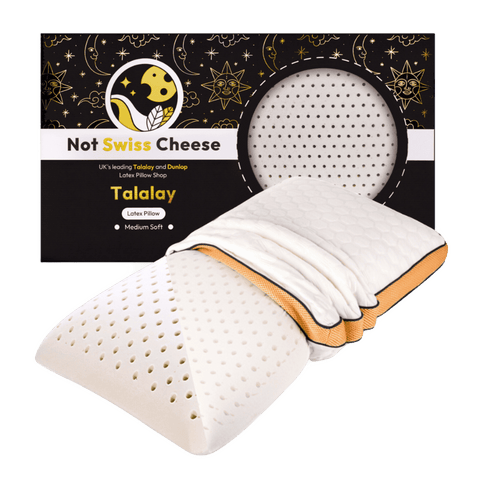
Example from our range: the Talalay Medium Soft Latex Pillow is listed at £74.99. The pitch is neck pain relief plus breathable, durable latex performance.
Organic cotton and cover design: the often-forgotten half of the chart
A Pillow Material Breathability Comparison Chart should not treat the cover as decoration. In real life, covers touch your skin for hours, and they control how moisture feels at the surface.
Cotton covers can help. But to be clear, cotton alone does not fix a non-breathable core. If the heat-trapping material is inside, you can still end up with moisture pooling at night.
Where things get sensible is when you pair breathable cores (like latex) with certified organic cotton covers. That is the difference between “marketing cool” and actual moisture management.

Example: The Organic Topper is listed at £149.00. It includes a GOTS organic cotton zip cover and a GOLS certified Dunlop latex core, and it specifically calls out open-pinhole airflow to keep you closer to room temperature.
That “open-pinhole airflow” phrase is doing real work here. It is describing air exchange through the latex structure and the intended effect on trapped heat.
Memory foam alternatives: why they often feel warmer, even with “cooling” layers
If you are comparing the Pillow Material Breathability Comparison Chart because you are fed up with overheating, the memory foam category usually ends up at the bottom for hot sleepers. Not because every person has the same experience, but because the typical behaviour is consistent.
Memory foam tends to hold warmth. Even when it has a cooling layer, the main body can still limit airflow and slow heat release. This is where you get that uncomfortable clammy sensation that can disrupt sleep.
We get asked if it is “toxic” in a simple yes or no way. You cannot reduce it to one claim. What we can say honestly is that if you are sweating, you need breathability first. If you fix breathability, you often fix the overall discomfort people blame on “chemicals” or “toxicity”.
If you want to sanity-check your choices, we cover the basics in our latex vs memory foam pillow guide, without the usual fluff.
Position, loft, and the “support first” rule for neutral alignment
Let’s be straight about it. Breathability can keep you cool, but a wrong pillow loft can still give you low-grade morning soreness. That is how people end up blaming the mattress when the problem is the cervical health setup overnight.
If you ask a physiotherapist, this kind of low-grade morning soreness is something people often wrongly blame on their mattress. It is commonly a support and alignment mismatch.
- Side sleepers often need enough loft to fill the gap between shoulder and head, so the neck stays in neutral alignment.
- Back sleepers usually need a flatter, supportive surface that does not push the head forward.
- Stomach sleepers have a harder problem, lying completely flat on your front forces the neck to rotate sharply to one side for hours at a time.
Here is the key point for your Pillow Material Breathability Comparison Chart. Choose a breathable pillow material for cooling, then choose the right loft for alignment. Get the order right.
How to use our breathability chart to pick a natural cooling pillow in 2026
You do not need a spreadsheet of chemistry. You need a short decision process that matches what hot sleepers actually experience in 2026.
- Start with your symptom. If you wake clammy or sweaty, prioritise breathability and moisture management.
- Pick a breathable pillow material core. In most real-world comparisons, natural latex beats memory foam for hot sleepers.
- Then check the cover. Organic cotton covers can make the surface feel less damp, especially with latex.
- Set the loft for neutral alignment. Breathability will not fix neck rotation or an overly high pillow.
- Do not buy “cooling” without airflow evidence. If it is just a thin layer, you are back to heat trapping in the main foam.
If you are the kind of person who reads three to six articles before buying, you already know the trap. Brands try to rush you with “limited time” urgency. We do not pretend you need to be scared into buying the right material.
For mattress and topper breathability, you can also treat your bed setup as one system. If you are overheating, the surface under your shoulders and upper back matters too.

Example: The 2-Inch Organic Latex Toppers are shown as a pre-launch reservation at £25.00, and the description again emphasises open-pinhole airflow and “no trapped heat” behaviour.
Quick comparison: breathable pillow materials vs natural latex mattress topper behaviour
People often think of breathability as only a “pillow thing”. It is not. If your mattress runs warm, your pillow is fighting an uphill battle.
Use this fast comparison part of the Pillow Material Breathability Comparison Chart thinking:
- Pillow breathability affects the air and moisture around your face and cervical health area.
- Topper breathability affects the heat exchange under your torso and shoulders.
- Latex behaves consistently across both, because the core material structure supports moisture absorption and evaporation with airflow.
To put it practically, if you are the person who keeps flipping the pillow side at 2am, you are usually dealing with moisture buildup and limited air exchange. Latex-based solutions address that at the material level.
Conclusion
Your Pillow Material Breathability Comparison Chart takeaway is simple. If you sleep hot, you want breathable pillow materials with real moisture management and air movement. In 2026, the evidence-first choice for most people who sweat is natural latex, paired with a sensible cover like organic cotton.
Just do not forget the support rule. You can have the most breathable pillow on the planet and still wake up stiff if the loft and neutral alignment are wrong. Get both right, and you stop the 3am “cool side” routine for good.
Frequently Asked Questions
Is a pillow material breathability comparison chart actually useful for hot sleepers?
Yes, a Pillow Material Breathability Comparison Chart is useful because it focuses on the real drivers of overheating, airflow and moisture buildup. If you sweat at night, the breathable pillow materials with better moisture evaporation usually feel cooler in practice, not just on the product page.
What are the most breathable pillow materials compared to memory foam alternatives?
Natural latex is usually the best-performing option in a Pillow Material Breathability Comparison Chart compared with memory foam alternatives. Memory foam tends to trap warmth, while latex allows moisture absorption and evaporation alongside better airflow.
Do Talalay latex and Dunlop latex pillows breathe differently?
They can feel different, but in a Pillow Material Breathability Comparison Chart they both generally outperform heat-trapping foams because of latex’s structure and moisture handling. Your best results still depend on picking the right loft for neutral alignment, not just the breathability number.
Will an organic cotton bedding cover make a cooling pillow work better?
A cotton cover can help with surface moisture feel, but it is not a replacement for a breathable pillow core. In a Pillow Material Breathability Comparison Chart, the cover is the secondary factor, the core material behaviour is the main one.
How do open-pinhole airflow designs affect pillow cooling?
Open-pinhole airflow designs are aimed at keeping airflow moving through the material, which reduces trapped heat. In a Pillow Material Breathability Comparison Chart, those features generally align with better “cool in the middle of the night” performance for hot sleepers.
Is “cooling” on pillow labels just marketing in 2026?
Sometimes, yes. A Pillow Material Breathability Comparison Chart helps you cut through buzzwords by focusing on airflow and moisture behaviour instead of “temperature balancing” claims.
What we make
We manufacture the pillows this guide describes. Same certifications, sold direct.