Talalay Latex vs Cooling Gel: Which Cools Better for Hot Sleepers (and Your Neck)?
If you’re shopping for the talalay latex vs cooling gel answer because you wake up hot, here’s the annoying bit: in 2025, gel-infused cooling pillows held th...
On this page
If you’re shopping for the talalay latex vs cooling gel answer because you wake up hot, here’s the annoying bit: in 2025, gel-infused cooling pillows held the largest product type share at 38.4%, so most of what you’ll see online is gel-led marketing, not a fair comparison to latex.
Key Takeaways
Quick verdict
|
Fit matters more than gimmicks
|
- Gel-infused foam is common in the category, but it’s usually a layer on top of a foam base, not a full breathable system.
- Talalay latex pillows tend to stay supportive for longer loft retention, which matters because sagging often increases heat and pressure.
- Trade-off: Talalay can cost more than gel options, but you’re paying for latex processing, not just a “cooling” add-on.
Question readers actually ask: “Is Talalay latex cooler than cooling gel in 2026?” Our answer is: it’s often cooler in the way that matters (airflow), but the best choice still depends on your sleeping position and pillow height.
What “cooling gel” usually means (and why it’s not the whole story)
“Cooling gel” on pillow listings usually means gel-infused foam or a gel-treated layer sitting on top of a foam core. That can give you a temporary cool-to-the-touch effect when you first lie down.
The problem is that heat management is not only about the first few minutes. You’re dealing with ongoing body heat, humidity, and pressure points through the night. If the base materials trap air or compress too much, that surface cooling can fade while the rest of the pillow still holds onto heat.
In the hot-sleeper world in 2026, more buyers are noticing that the “cooling” claim is often a marketing headline. We’ve seen plenty of products where the cooler layer is thin, while the foam underneath is still memory-foam-ish in feel (slow recovery, higher heat retention). If you want to understand the broader “cooling foam vs alternatives” picture, it helps to know what latex is doing underneath the surface.
- You hate the warm, sticky feel some foams get.
- You sleep in a room that’s already quite warm, and you like an immediate cool sensation.
- You’re sensitive to surface temperature more than to overall airflow.
Talalay latex basics: airflow, resilience, and why it feels different
Talalay latex is still latex, so you’re not buying a “cooling gimmick”. You’re buying a material with an open-cell structure that supports breathability. The idea is simple: air can move through the foam, so heat is less likely to build up in place.
On our latex pillow range, we position latex as naturally cool because it stays breathable. It also helps that latex tends to bounce back rather than collapse. That matters for neck pain because a saggy pillow shifts your head position, and that can tighten your neck and shoulders all night.
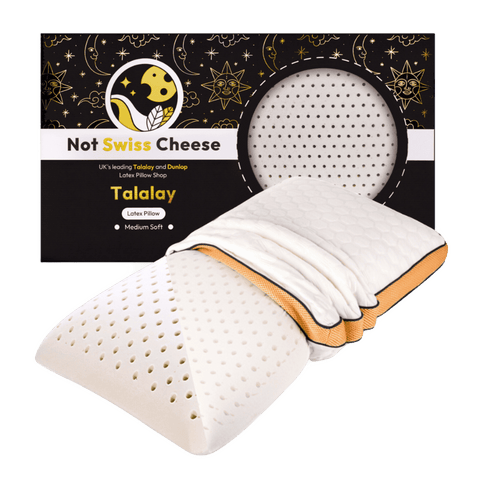
If you want a concrete example of our Talalay range, the Talalay Medium Soft Neck Pain Relief Latex Pillow is listed at £74.99. The product page notes it’s “soft” and “breathable”, and it’s built to last 10+ years.

Talalay latex vs cooling gel: what’s the real temperature mechanism?
Here’s the clean way to think about talalay latex vs cooling gel: one is a breathable material strategy, the other is a surface temperature strategy. That changes how cooling behaves over the night.
Cooling gel mechanisms (typical): temperature-at-contact, usually from gel-infused foam or gel layers. Depending on the formulation, the gel can reduce perceived warmth initially, but it often doesn’t keep pace with your ongoing heat output.
Talalay latex mechanisms (typical): airflow through open cells, plus resilient support that helps keep your head and neck aligned. If your neck stays supported, you’re less likely to fidget, roll, and sink into the pillow repeatedly.
That’s why gel products look everywhere. But category share and market growth are not the same thing as “stays cool all night for everyone”. The real test is how the material behaves under pressure, with your body heat, in your sleeping position.
If your primary issue is overheating plus neck stiffness, we’d also say this out loud: cooling helps, but so does support. A pillow that presses into the side of your neck, or one that collapses and leaves your spine out of alignment, can turn “warmth” into “unsettled rest”.
Which feels cooler on first touch, and which stays cooler?
People often compare first-touch coolness. Cooling gel can win that moment. You lie down and feel the surface chill.
But staying cooler depends on whether heat can escape. That’s where Talalay latex has a different plan. Instead of relying on a cool touch layer, it leans on breathability and airflow through the foam.
In 2026, buyers are also more aware that “cooling” can be offset by the rest of your bedding setup. A thick duvet, synthetic pillowcases, and mattresses that trap heat can all undermine cooling efforts.
So we usually recommend you pair the pillow material choice with basic system tweaks:
- Use breathable pillowcases (cotton or linen, not anything that traps heat).
- Check your mattress topper and bedding fibres. If everything is foam-and-poly, you’re fighting yourself.
- Keep pillow loft realistic. Too high can kink the neck, which increases muscle tension.
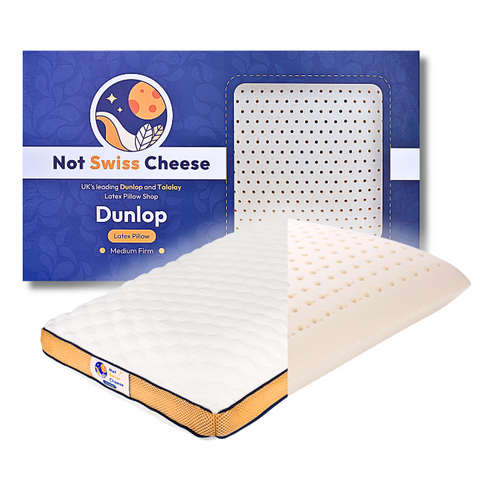
If you want a latex alternative with a firmer feel for some sleepers, the Dunlop Medium Firm Queen Size Latex Foam Pillow is listed at £58.99. It’s also described as naturally cool and supportive.

Comfort and neck support: why your cooling choice affects pain too
Let’s stop pretending cooling is only about temperature. If your pillow height is wrong, you don’t just get neck pain. You get more shifting, more micro-movements, more friction and pressure. That can make you feel “hot” even when the room is fine.
Talalay latex pillows are often chosen for their supportive, breathable feel. We also point people to our neck-pain pages because support is part of the cooling story.
If you’re researching specifically for neck pain, start with:
- Goodbye Neck Pain with Talalay Latex Pillows
- Best Pillow for Neck Pain (Talalay)
- Neck Support Pillow for the “how height changes alignment” angle
We’re not going to sell you a cooler surface if it destabilises your neck. If you want less overheating and fewer aches, you pick materials that manage heat and still hold their shape.
“My gel pillow feels cool for a bit, then I’m back to sweating and my neck feels tight.”
Often, that’s a combination of heat build-up in the core plus a pillow that isn’t holding your alignment consistently.
Price reality check in 2026: Talalay processing costs more, but what you get matters
In 2026, you can still find “cooling gel” pillows at a wide range of prices. But the cheapest options are often cheap for a reason: thinner cooling layers, lower material quality, and shorter longevity.
Talalay latex tends to cost more because it’s processed further than some other latex forms and because you’re buying a durable, resilient material core. That’s why shoppers doing talalay latex vs cooling gel comparisons should treat price as a clue about construction.
Let’s anchor that with our own numbers. Our Talalay Medium Soft Latex Pillow is £74.99. If you pick a Dunlop option, the Dunlop Medium Firm Latex Foam Pillow is £58.99.
So yes, Talalay costs more in our range. But you’re not paying for a gel packet or a “cooling cover” gimmick. You’re paying for latex processing and long-term support that you can actually feel (and live with) for years.
How to choose in plain terms: your sleeping position and your heat triggers
If you want the most practical way to decide talalay latex vs cooling gel, we suggest you start with two questions.
- Do you need neck support to stop your pain cycling? If yes, start with Talalay latex support choices, not surface coolness.
- Do you hate hot foam feel more than you care about alignment? If yes, gel can be a comfort win at the surface, but you still need to check the core and pillow height.
Now add your sleeping position:
- Side sleepers usually need the pillow to fill the gap and keep the neck straight. Talalay’s support and loft options are often a better match than low-loft gel pillows.
- Back sleepers often do best with medium height and moderate firmness, not something that lets your head sink.
- Stomach sleepers tend to struggle with any pillow that lifts the chin. If you’re a stomach sleeper and want cooling, we’d push you to reassess pillow height first, then materials.
If you’re a side sleeper and you’re new to latex, it’s worth reading our Best Neck Pillows for Side Sleepers page. It’s specifically about how the pillow affects neck comfort, and it touches on Talalay vs other materials.
Conclusion: talalay latex vs cooling gel, the decision you actually need
talalay latex vs cooling gel is not just a contest of who sounds cooler. Cooling gel is usually about a surface cool-to-the-touch effect, while Talalay latex is about breathability and airflow through an open-cell material, plus support that helps keep your neck aligned.
If you’re buying for hot-sleeper comfort in 2026 and you also have neck or shoulder pain, we’d usually start with Talalay latex because temperature control and support tend to work together. If you want immediate surface coolness above all else, gel can feel great at first, but you still need to check whether the pillow core is breathable and whether the loft is right.
Frequently Asked Questions
Is Talalay latex cooler than cooling gel in 2026?
Often, yes, because Talalay latex relies on breathability and airflow through the material, not just a cool-touch layer. Cooling gel can feel cold at first, but the overall heat control depends on the foam core and how much air can move through the pillow.
Does cooling gel wear out or stop being “cool” over time?
Cooling gel effects can fade if the pillow compresses, traps more heat, or if the gel layer is thin. With talalay latex vs cooling gel comparisons, latex’s open-cell structure tends to keep performing as long as the pillow maintains loft.
Is cooling gel better for overheating nights than Talalay latex?
Not automatically. If you overheat because your pillow traps heat and your neck alignment slips, gel may not solve the real problem. With talalay latex vs cooling gel, Talalay usually wins when you want both airflow and stable support.
Will Talalay latex help with neck pain compared to cooling gel pillows?
It can, because the pillow’s support and loft affect spinal alignment, and that changes how your neck muscles behave all night. Gel can help surface temperature, but it does not guarantee correct alignment or consistent pressure distribution.
What pillow is more breathable: Talalay latex or gel-infused foam?
Talalay latex is generally more breathable because it’s an open-cell material designed for airflow. Gel-infused foam can improve surface feel, but breathability is still limited by the foam core underneath in many designs.
Is Talalay latex worth the price versus cooling gel pillows?
For many people, yes, because talalay latex vs cooling gel is a trade-off between latex processing and long-term resilience versus a cooling layer. If you want your pillow to last, Talalay’s durability and support often make the higher price easier to justify.
What we make
We manufacture the pillows this guide describes. Same certifications, sold direct.