Why Your 'Orthopaedic' Pillow Might Be Creating New Aches
In one study, regular waking symptoms and poor-quality sleep were reported by over 50% of participants, and it was linked to pillows that did not do what the...
On this page
In one study, regular waking symptoms and poor-quality sleep were reported by over 50% of participants, and it was linked to pillows that did not do what they were supposed to. So if your “orthopaedic pillow” is giving you new aches, you are not imagining things, and the label alone is not proof of fit.
Key Takeaways
| What’s going wrong? | “Orthopaedic” branding is not a regulated material or design standard, so support can be anything from decent to useless. |
| It shows up as pain | Waking cervical stiffness and scapula or shoulder-blade pain correlate with poor sleep quality. |
| Comfort is not the same as relief | You can feel “comfortable” and still wake with symptoms, especially if height and loft are off. |
| Height matters | Pillow height in the roughly 7 to 11 cm range is associated with improved sleep quality and better alignment in research. |
| Material matters | Dense latex supports neutral alignment, while softer or mismatched foams can allow the head to sink or tilt. |
| If you sleep on your side | Side-sleeper needs loft, to fill the space between shoulder and neck, not a flat “one size fits all” wedge. |
- Check your baseline, not the label. Start with your usual position, then match pillow loft and firmness.
- For side sleepers with neck and shoulder issues, we lay out practical options on best neck pillows for side sleepers.
- If you suspect your pillow is making your aches worse, start with our guide to sore neck and shoulder pain.
- If you are undecided on materials, the differences between Dunlop vs Talalay latex pillows are a useful place to begin.
No regulator defines or tests the claim, so the label alone tells you nothing about support.
1) “Orthopaedic” is a label, not a test you can feel
To be honest, most “orthopaedic pillow” marketing is trying to shortcut your decision. It gives you a word, not a spec. And to be even more blunt, the term is not a regulated standard, so you cannot assume the materials, height, or support design will match what your neck actually needs.
There is a reason so many people end up with a new set of aches after switching pillows. Their head and neck position changes, even slightly, night after night. That can irritate cervical tissues, keep your muscles in tension, and turn “sleep” into a long, slow stretch they never asked for.
What you should check instead of the label
- Loft and height, especially for side sleepers. If the pillow is too high, your neck bends. Too low, and your head drops, which strains supporting muscles.
- Support and sink. If you press it and it collapses a lot, it may not keep neutral alignment.
- Shape. A contour can help, but it can also create a new pressure point if it does not match your anatomy.
- Material behaviour. Latex is springy and breathable, memory foam is viscoelastic and can trap heat and sink more depending on formulation.
2) Your neck is not “weak”, it is adapting to the wrong position
Your neck muscles do a lot of invisible work at night. If the pillow lets your head drift forward, rotate, or sink, the muscles that support the thoracic spine and upper shoulder area have to compensate. Over time, that low-grade strain shows up as morning soreness, stiffness, or shoulder blade discomfort.
If you ask a physiotherapist, this kind of low-grade morning soreness is something people often wrongly blame on their mattress. More often than you think, it is pillow height, loft, and support consistency doing the damage.
Side sleepers have the hardest job
When you lie on your side without additional support, the top arm tends to rotate forward and drag the shoulder inward. The neck then has to pick up the slack, instead of staying aligned with your spine.
This is why the “orthopedic pillow for side sleepers” angle is so common, and also why it can fail. The pillow needs to fill the space between your shoulder and your neck. If it does not, you get new aches.
3) Comfort can lie to you, waking symptoms do not
Here is the annoying bit. Pillow comfort reports do not reliably predict whether you wake with symptoms. You can feel “fine” when you lie down, then wake up stiff or sore because the support did not hold your cervical health in neutral alignment over the whole night.
This is why an orthopaedic neck support pillow can be a bad buy. It might be soft, plush, and instantly appealing. But if it does not match your loft needs, you may just be trading one kind of discomfort for another.
What “new aches” often point to
- Stiff neck on waking: usually too much flexion or extension, or the head sinking slightly through the night.
- Shoulder blade or scapula discomfort: often a side-sleeper fit problem, when the pillow does not keep your shoulder and neck supported together.
- Heat build-up: if you sweat at night, a pillow that traps heat can add an extra layer of sleep disruption.
4) Height and loft: the hidden reason “orthopedic neck pillow” shoppers stay stuck
Many buyers chase the “best orthopedic pillow” lists, then pick based on feel in the shop. But the supporting effect at night depends on height. In research looking at pillow shape and content, pillow height in the roughly 7 to 11 cm range was associated with improved sleep quality, better spinal alignment, proper pressure distribution, and reduced muscle tension.
So if your “orthopedic wedge pillow” or contoured ortho pillow feels supportive for five minutes, it might still be off by enough millimetres to keep your cervical muscles working all night.
How to self-check height in 30 seconds
- Lie in your usual position, side or back.
- Have someone look at your alignment from the side.
- Your goal is neutral alignment, not a bend in the neck.
- If your chin points up or down sharply, the loft is wrong.
5) The material story: Dunlop vs Talalay, and why “orthopedic memory foam pillow” can be a trap
We get it. You hear “orthopaedic” and your brain thinks “support”. But the support has to come from something. And in real life, materials behave differently under pressure, temperature, and movement.
Latex has natural spring and breathability. It tends to maintain loft longer than many cheaper foams, which matters because if the pillow collapses, your head position changes mid-sleep.
On our site we often explain this as Dunlop vs Talalay latex, with the trade-offs clear. The point is not that one is “better”. It is that one might suit your neck and sleeping position, and the other might not.
Dunlop vs Talalay, in plain terms
- Dunlop latex: typically firmer, often better if you need stable neck alignment and you do not want to sink.
- Talalay latex: typically softer and more contouring, useful if you want plush support without losing responsiveness.
If you are considering an “orthopedic memory foam pillow” for neck pain, be careful. Memory foam can feel supportive at first, then trap heat and sink more depending on your body weight and the foam density. That is a recipe for moisture buildup and a head position that changes as the material warms and yields.


6) If you bought “orthopaedic” and your neck aches got worse, here is why
Let us run through the most common causes, because it is usually not one thing. It is a mismatch between your body and the pillow’s support behaviour.
Common failure points with an “ortho pillow”
- Too much loft: your neck bends upward, which can worsen cervical stiffness.
- Too little loft: your head drops, and your muscles work to hold alignment.
- Contour placed for the wrong shoulder height: the curve can press the wrong spot and keep tissues irritated.
- Memory foam alternative that sinks: you get that “stuck” feeling, then you wake more often and move more.
- Heat retention: uncomfortable, clammy sleep can disrupt rest and amplify morning soreness.
This is also why “best orthopaedic pillow for neck pain” can be misleading. A list cannot test your neck posture. It can only guess based on general preferences.
7) What better testing looks like, and what you can do in 2026
In 2026, consumers are more suspicious of gimmicks than they were even a couple of years ago. Good. But suspicion does not replace checking materials and support design.
When an organisation does testing properly, it is obvious from the effort involved. That is the point, because the label alone does not tell you what you are actually buying.
Practical steps you can take before you buy again
- Match the pillow to your sleeping position. Side sleepers often need a different loft than back sleepers.
- Match firmness to how much you sink. If you sink fast, you probably need something that keeps loft better.
- Be honest about heat. If you sweat at night, breathability and moisture management matter, not just “support”.
- Avoid “orthopedic” designs that do not specify materials. If they cannot tell you what it is made of, they are not telling you how it will behave.
Where this shows up in your wallet
Orthopaedic pillow pricing can be all over the place, but context matters. NCOA reported that best orthopedic pillows cost $65 to $172 for standard or queen sizes. If you are paying more, it is reasonable to demand real support criteria, not a buzzword.
8) If you want neck support, start with the right pillow type, not the right slogan
If your goal is relief, the most consistent path is to match loft and materials to your cervical health needs. That usually means either a properly supported latex pillow, or an adjustable option if you genuinely cannot find your height quickly.
On our side, we focus on natural latex and clear differences between Dunlop and Talalay so you can pick based on feel and support behaviour, not just “orthopedic pillow” vibes.
Two examples people actually compare
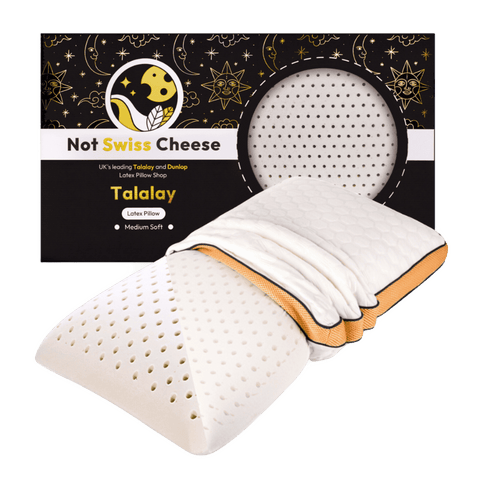
- Talalay Medium Soft Latex Pillow, listed at £71.99. Designed for a plush, responsive feel for neck pain relief with lasting loft and cooling properties.
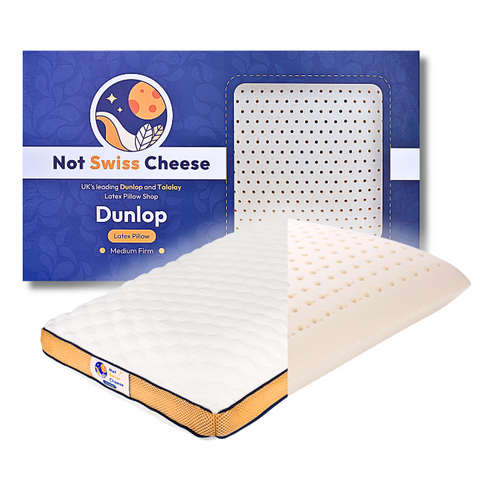
- Dunlop Medium Firm Latex Pillow, listed at £58.99. Dense and medium-firm for stable neck alignment, with a naturally heat-dissipating open-cell structure for cooler sleep.
If you are searching for an “orthopaedic pillow” that fits side sleeping, we recommend starting with our side-sleeper guidance on side sleeper pillows, then narrowing by neck pain.
Want a structured starting point?
- For neck pain and shoulder support, use our neck pillows as the filter.
- If you like the idea of latex but want the “how do I choose” angle, read our latex pillows.
Conclusion
Why Your 'Orthopaedic' Pillow Might Be Creating New Aches comes down to one plain thing, support does not match your anatomy. The word “orthopaedic” is not a regulated promise, and if the pillow changes your head and neck position by even a little, you can wake stiffer and sore.
In 2026, the sensible move is to ignore the slogan and check the spec, loft, and material behaviour. If you are chasing evidence-first comfort, start with the right pillow type for your position, then choose materials that maintain loft and manage heat, not just ones that look supportive on day one.
Frequently Asked Questions
Why do I wake up with new neck pain after using an orthopaedic pillow?
It is usually a loft and support mismatch, the pillow is either too high, too low, or it lets your head sink in a way that strains cervical health overnight. This can show up as waking cervical stiffness, which has a strong relationship with poor sleep quality in research.
Is an orthopaedic pillow for neck pain actually regulated or certified in 2026?
No. The term “orthopedic pillow” is not regulated as a standard, so the label alone does not tell you what the material or design supports. You have to judge support by loft, construction, and what the pillow does under your weight.
What is the best orthopaedic pillow for side sleepers with neck pain?
For side sleepers, the “best” option is the one that keeps your neck in neutral alignment by filling the shoulder gap without bending your head up or down. Many people do better with natural latex that maintains loft, rather than softer foams that sink and shift as the night goes on.
Is an orthopedic memory foam pillow a good memory foam alternative for neck pain?
Sometimes, but “orthopedic memory foam pillow” can still be a problem if it traps heat or sinks more than you need. If you wake sweaty or stiff, switching to breathable, responsive support like natural latex can reduce moisture buildup and help hold alignment longer.
How do Talalay latex vs Dunlop latex affect support for neck pain?
Talalay is typically medium-soft with a more contouring feel, while Dunlop is typically denser and medium-firm, which can be better if you want stable neck alignment. If your aches are new, it often means your body prefers one firmness profile over the other.
What pillow height should I aim for to reduce cervical stiffness?
Research suggests pillow height in the roughly 7 to 11 cm range is associated with improved sleep quality and better spinal alignment, with reduced muscle tension. If you do not fit that range, your neck muscles may compensate all night, which can create new aches.
What we make
We manufacture the pillows this guide describes. Same certifications, sold direct.